
Tucker Harding
th2252@tc.columbia.edu
From 2006 to 2015, Dr. Harding was an educational technologist and project manager at the Columbia Center for New Media Teaching and Learning, one of the first institutions of its kind in the world, located at Columbia University in New York City. The center was founded by Dr. Frank Moretti, who was also Harding's doctoral advisor.
Below you will find a portfolio of some of Harding's work there, including projects he created and/or project managed.

Mediathread is CCNMTL's innovative, open-source platform for exploration, analysis, and organization of web-based multimedia content.
Mediathread connects to a variety of image and video collections (such as YouTube, Flickr, library databases, and course libraries), enabling users to virtually lift items out of these collections and into an analysis environment using a bookmarklet application that was developed in-house. Because there's no copying or replicating of the media being imported, there are no copyright violations: importing a Mediathread asset is like opening a window into that asset where it lives. Through this "window", Mediathread items can be clipped, annotated, organized, and embedded into multimedia composition spaces.
Work in Mediathread can be shared with classmates or larger audiences, including the public. There's a growing body of evidence showing that students produce better work when given an audience beyond the instructor as it encourages formalized thinking, clarified interpretations, and improved arguments.

StudyPlace serves those who seek to advance the shared understanding of education, communication, and culture by filling a gap in the way universities organize the study of education. Great research universities simultaneously support both academic inquiry and professional preparation with respect to the vital sectors of life. They generally include both departments of sociology and schools of social work, departments of economics and schools of business, departments of politics and schools of public affairs, departments of biology and physiology and schools of medicine.
Provisions for the study of education rarely strike such a balance, however, for there are few departments of education independent of the professional concerns dominant in schools of education. As a step towards including education as an academic study in the arts and sciences, StudyPlace provides an online resource for scholars and students whose interest in education is philosophic, intellectual, and academic.

The Forced Migration website contains case studies in humanitarian crises that focus on issues of protection and the moral quandaries of humanitarian action. Included in each case are authentic media resources that are strategically attached to parts of the narratives.
The website also features a forum that provides students with a space for raising questions, completing assignments, and analyzing and critiquing any of the media resources or cases as artifacts. In spring 2009, content revision began in preparation for a new 14-week course, Protection of Children in Disaster and War.

Columbia Caseworks of the Columbia Business School and CCNMTL partnered to create the Business School's first multimedia case study environment. Here, students navigate a case via a virtual email inbox as they take the role of an advertising executive who is required to direct marketing decisions to improve adoption rates at an adoption agency called AdoptUsKids.
At designated times in the narrative, students complete assignments in a built-in writing space. Student work is stored and reviewed by the instructor, and is then used to guide discussion during class.
ReliefSim is a unique, web-based training tool designed to create a believable representation of the decision-environment confronted by refugee camp managers during a humanitarian crisis. Students play the role of a health relief director and have a team of people they assign to assess the situation and attempt to manage the health concerns of the crisis.
The educational goal concerns the challenges arising from prioritizing assessments and interventions while saving lives in moments of crisis. The simulation was originally designed to train humanitarian workers to manage complex emergencies, and is currently used as the final exam in the course Public Health in Humanitarian Action at Columbia's Mailman School of Public Health.
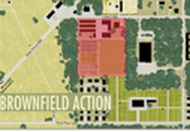
The Brownfield Action simulation is a central component of Introduction to Environmental Science Course at Barnard College. In this simulation, students are presented with maps, documents, videos, and an extensive network of scientific data to investigate a suspected contaminated land site. They assume the roles of environmental consulting firms contracting with a real estate developer to study the condition of the site and report on the feasibility of commercial construction.
First developed in 1999, Brownfield Action has been nationally recognized by the Association of American Colleges and Universities and was featured as a model curriculum at the Association's SENCER Institute (Science Education for New Civic Engagements and Responsibilities). Development of the simulation's most recent evolution is supported by a grant from the National Science Foundation, with the broader goal of disseminating the project to other colleges and universities.
Related News:

The Millennium Village Simulation is a web-based simulation of economics and survival for one family and their village in a sub-Saharan African village. In a virtual world of extreme poverty, disease, and environmental variability, students are challenged to help a family of two survive and prosper over a fifty-year period.
By making decisions regarding the family's allocation of time and financial resources, students develop a greater understanding of the manifold disciplines—such as agronomy, nutrition, economics, epidemiology, public health and development management—that constitute sustainable development and how those disciplines interact with each other in "real world" scenarios. The simulation's creators hope that, by immersing themselves in the daily life of a family, students will identify more deeply with the local experience of extreme poverty.
The simulation was created as a study tool for students in Professor Jeffrey Sachs' undergraduate course Challenges of Sustainable Development, and is freely available to sustainable development practitioners and the general public.
Related News:

Ground|Work is an online simulation in which users grapple with maintaining the fragile peace in a post-conflict country (Nimpala). Over the course of seven weeks students in Professor Marc Levy's Environment, Conflict, and Resolution Strategy course use their knowledge of previous conflicts and conflict resolution strategies to complete both individual and team activities.
These activities include drafting a conflict assessment, funding interventions, preventing or responding to humanitarian crises, and working with donors. When the simulation concludes, teams will find that Nimpala is in one of three states/conditions: peace, humanitarian crisis, or resurgence of conflict.
Related News:

Country X is a web-based educational simulation created in response to challenges surrounding the training and education of prospective genocide prevention practitioners. The simulation, developed in partnership with Professor Aldo Civico of the Center for International Conflict Resolution, takes place in a fictitious nation experiencing rapid instability called Country X.
Students work in groups of four, with each student assuming the identity of one of four characters representing the perspectives of diplomatic, intelligence, military, and civil society communities.
After analyzing a starting condition, players must address the situation from within their role by independently making a strategic policy decision and providing a rationale for it. The combination of player decisions at each phase of the simulation determines a resulting condition for Country X for better or worse. Students work through three such decision phases and then confront and attempt to deconstruct a final condition. The simulation was created to work in an integrated way with class discussions facilitated by an instructor. It is being used in Professor Civico's genocide prevention seminar and will also be available to other courses at Columbia.
Related News: